Child Myopia
Myopia, commonly referred to as near-sightedness or short-sightedness, is a widespread vision condition characterized by blurry distant vision and clear close vision. It often begins in childhood and can worsen over time. As the global prevalence of myopia among children continues to rise, it is essential for parents and caregivers to grasp effective strategies for managing this condition.
In this article, you will gain insight into the nature of myopia, its causes, and practical steps you can take to address the issue and help ensure a healthier visual future for your child.
CHAPTER 1: Understanding the problem
1. Health Risks of high Myopia
High myopia, defined as a refractive error of -6 diopters or more, poses significant health risks due to the elongation of the eyeball. This elongation increases the likelihood of various eye diseases, as outlined below:
| Condition | Increased Risk | Description |
| Cataracts | 5.5x increase1 | Cloudy formations on the lens, leading to blurry vision and potential surgery. |
| Glaucoma | 3.3x increase2 | Increased pressure within the eye causing optic nerve damage; can lead to blindness. |
| Retinal Detachment | 40x increase3 | Displacement of the retina from its support tissue, which can result in vision loss if not treated promptly. |
| Myopic Macular Degeneration | 845x increase4 | Damage to the macula, affecting central vision and potentially leading to severe visual impairment. |
| Pathological Myopia | Significant risk5 | Progression of high myopia that can lead to severe vision loss due to structural changes in the eye. |
Note: Surgical procedures like LASIK correct refractive errors but do not mitigate these health risks since they stem from the eyeball’s physical elongation.
2. Lifelong discomfort
- Visual Distortion
High prescriptions often result in visual distortions, particularly in the peripheral vision - Thicker Lenses
High prescriptions necessitate thicker lenses, which can cause discomfort, which are less aesthetic - Weight of Glasses
Heavier lenses can lead to soreness on the nose and behind the ears, particularly during prolonged wear - Adjustment Period
New glasses may require an adjustment period. The higher the prescription, the more susceptible to small changes. This adjustment can lead to temporary discomfort as the eyes adapt to the new lenses - Cost Implications
High-index lenses, designed to be thinner and lighter, are significantly more expensive, sometimes tripling the cost - Dependancy
Unlike a person with -1 diopter, someone with high myopia is incapable of going through their day if anything were to happen to their glasses/contact lenses

CHAPTER 2: Myopia development in children
Most children are typically born farsighted, with the eye’s growth reducing this refractive error towards zero. If zero diopters are reached around age seven, continued eye growth often leads to myopia. In 90% of cases, myopia may progress until age 20, with some continuing until age 25.
1. Genetic factors
- Hereditary Influence
Children with one myopic parent are twice as likely to develop myopia. The risk increases fivefold if both parents are myopic6 - Heritability Estimates
Studies on twins suggest heritability ranges from 50% to 90%, highlighting a strong genetic component7
2. Environmental factors
While genetics play a crucial role in the development of myopia, environmental factors also significantly contribute to its prevalence:
- Increased Near Work
Prolonged activities that require close focus (e.g., reading, using computers) are linked to higher rates of myopia progression - Outdoor Activity
Increased outdoor time has been shown to reduce myopia risk. Sunlight exposure, particularly at least 120 minutes daily, can lower progression by about 32.9%8
3. The Role of Light in Myopia Development
Research has explored the impact of various light spectrums on myopia:
- Brightness vs. Wavelength
It has been suggested that brightness, rather than specific wavelengths like UV, plays a more significant role in myopia prevention. Outdoor light levels can be significantly brighter than indoor light, which may contribute to lower myopia rates among children who spend more time outdoors9 - UV light
Some research suggests that UV exposure may have a complex relationship with myopia progression. A study indicated that children wearing soft contact lenses with UV protection experienced slower myopia progression compared to those without UV protection, implying that UV light might influence myopia development negatively10 - Blue Light
Exposure to blue light might reduce axial eye growth, thereby decreasing myopia risk11 - Violet Light
Like blue light, this component of sunlight may inhibit eye elongation and offer protective effects against myopia12
Practical Implications: Children should spend at least two hours outdoors daily, wearing high-index clear lenses without blue-light filters to benefit from natural light.

Chapter 3: So what can you do about it?
Preventing or slowing the progression of child myopia involves a combination of lifestyle adjustments, environmental modifications, and, in some cases, medical interventions. Here are key strategies:
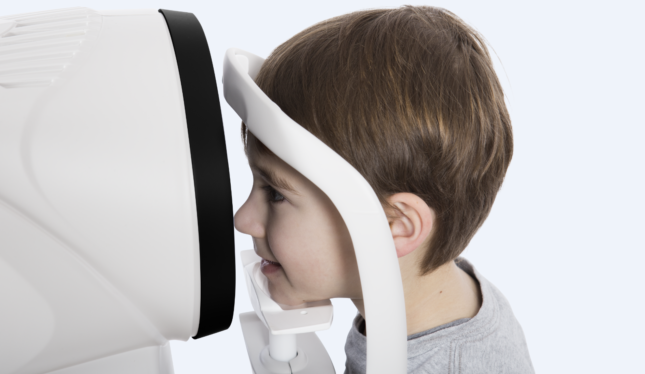
1. Regular Eye Examinations
- Early Detection
Identifying and addressing vision changes early can help manage myopia progression more effectively. Ideally, a child should visit routinely an ophthalmologist at ages 1, 3, 5 and 7 - Routine Check-ups
Have children’s eyes checked regularly by an eye care professional to monitor vision changes and adjust prescriptions as needed. Children with diagnosed myopia usually have follow ups every 6 months
2. Corrective Measures and Treatments
- Eyeglasses
Ensure children have the correct prescription glasses. Many new lens designs have come to market recently with variable success in slowing myopia growth. Learn more about them here. - Contact Lenses
- Orthokeratology (Ortho-K)
Rigid gas-permeable contact lenses worn overnight to reshape the cornea temporarily and control myopia progression - Multifocal Contact Lenses
These lenses have been shown to slow the progression of myopia by focusing light in a way that reduces eye elongation - Special designs
There are special soft contact lenses for slowing the growth of myopia.
Contact lenses have shown excellent results in managing myopia. If you choose correction with contact lenses, consult with an ophthalmologist to determine which contact lens is most suitable for your child.
- Orthokeratology (Ortho-K)
3. Increase Outdoor Activities
- Time in Natural Light
Encourage children to spend at least 2 hours daily outdoors. Outdoor environments provide higher light levels compared to indoor settings, which may help regulate eye growth and reduce myopia progression - Distance gaze
Confined spaces, such as a small room, can stimulate eye growth in a similar way to reading at close range, although to a lesser extent. Spending time outdoors encourages gazing into the distance, which is beneficial for children’s eyes.


4. Manage Screen Time and Near Work
- Limit Prolonged Screen Use
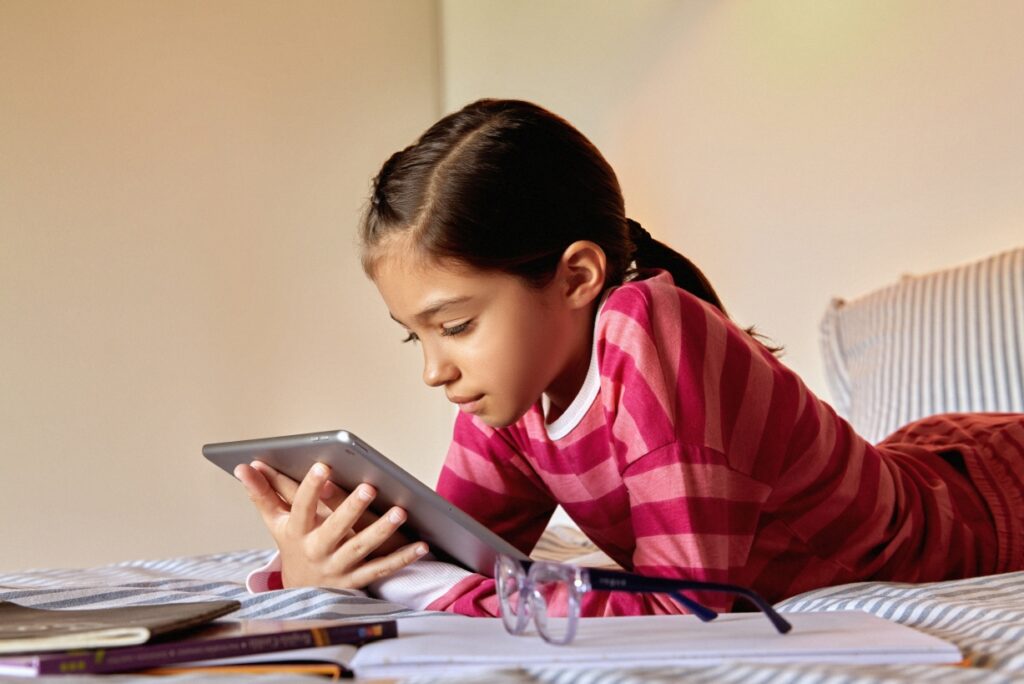
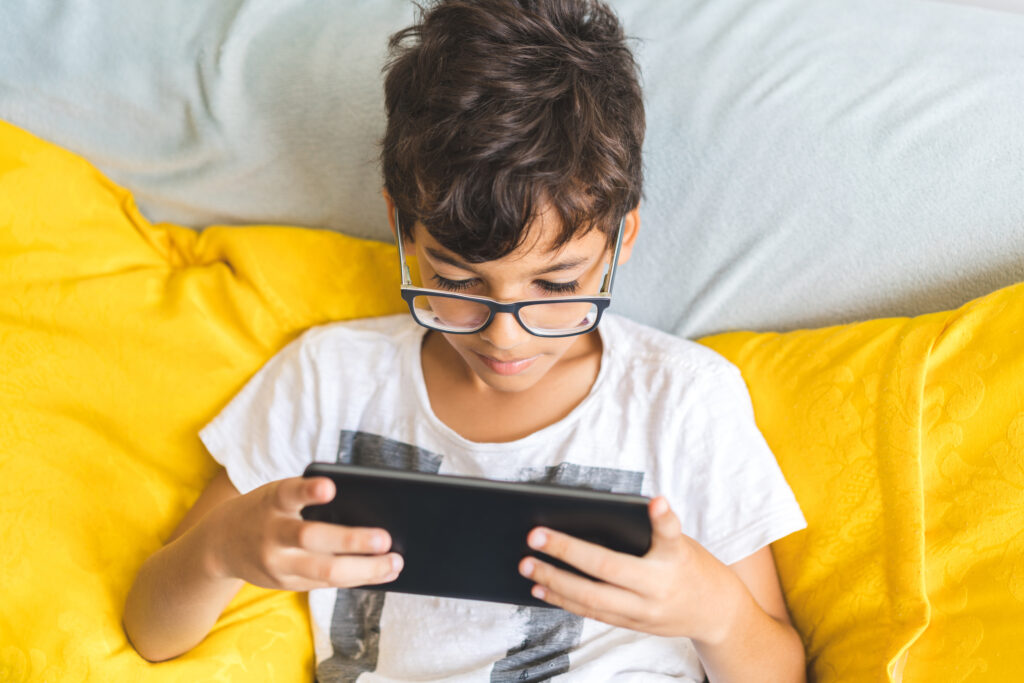
Set reasonable limits on screen time, especially for activities that require prolonged near focus, such as using computers, tablets, and smartphones. If TV needs to be watched, the more distance – the better. Remember it’s not about the technology of the object, it’s about the distance - Appropriate Viewing Distance
Ensure that children maintain a proper distance from screens and books – ideally 30-40 cm from books and at least an arm’s length from screens. Since smartphone screens are smaller they require looking at a closer distance. Children have an immensely bigger ability to fixate on objects not much further from their nose, unlike grown ups, therefore it is very likely to find your child looking at a smartphone at 10cm distance. This should be avoided at all cost

5. Pharmacological Interventions
- Atropine Eye Drops
Low-dose atropine drops have been used to slow myopia progression in children. Consult with an eye care professional to determine if this treatment is appropriate
6. Nutrition and Eye Health
- Balanced Diet
Ensure a diet rich in vitamins A, C, and E, and omega-3 fatty acids, which are beneficial for overall eye health - Hydration
Adequate fluid intake supports overall body health, including the eyes
7. Education and Awareness
- Educate Children
Teach children about the importance of taking care of their eyes and the potential risks of excessive screen use - Parental Involvement
Parents should model good habits and encourage a balanced lifestyle that includes outdoor play and limited screen time
8. Emerging Technologies
- Research and Trials
Stay informed about new developments in myopia management, such as advanced lens technologies or novel pharmaceutical treatments, and discuss these options with an eye care professional
By implementing these strategies, parents and caregivers can play a crucial role in slowing the progression of myopia in children, promoting better long-term eye health.

- https://sci-hub.se/https://www.sciencedirect.com/science/article/abs/pii/S1350946212000444?via%3Dihub ↩︎
- https://sci-hub.se/https://www.sciencedirect.com/science/article/abs/pii/S1350946212000444?via%3Dihub ↩︎
- https://sci-hub.se/https://www.sciencedirect.com/science/article/abs/pii/S1350946212000444?via%3Dihub ↩︎
- https://pmc.ncbi.nlm.nih.gov/articles/PMC7401976/ ↩︎
- https://pmc.ncbi.nlm.nih.gov/articles/PMC7731360/ ↩︎
- https://pmc.ncbi.nlm.nih.gov/articles/PMC10532298/ ↩︎
- https://pmc.ncbi.nlm.nih.gov/articles/PMC8947159/ ↩︎
- https://www.mdpi.com/1660-4601/16/14/2595 ↩︎
- https://www.myopiaprofile.com/articles/why-outdoor-time-matters-in-myopia-development ↩︎
- https://academic.oup.com/pcm/article/7/4/pbae022/7819141?login=false ↩︎
- https://pmc.ncbi.nlm.nih.gov/articles/PMC9114237/ ↩︎
- https://pmc.ncbi.nlm.nih.gov/articles/PMC5233810/ ↩︎